
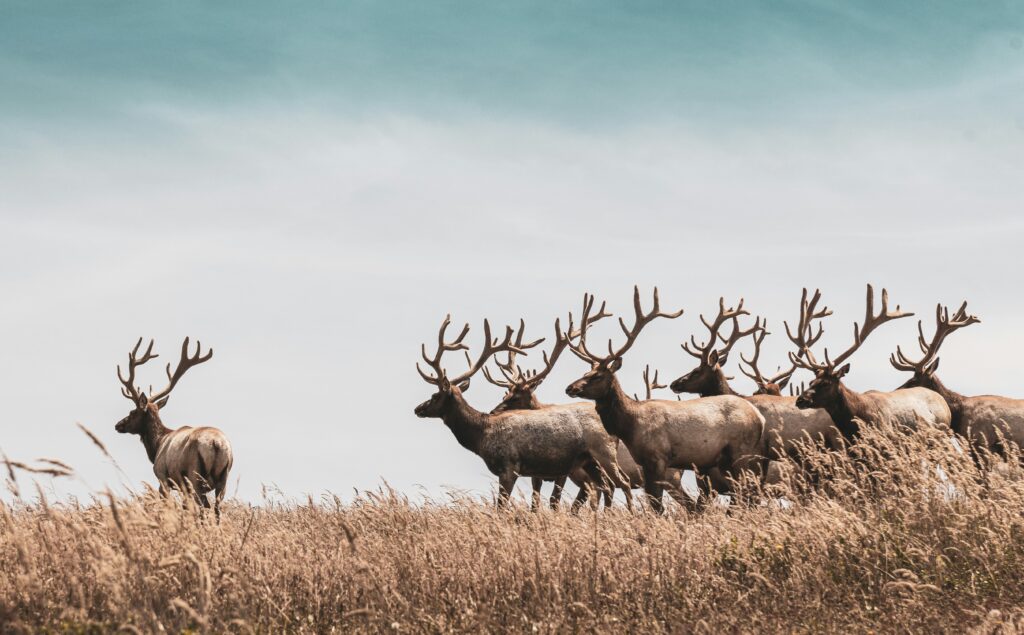
Why Science, Conservation, and Economics are pointing to Exotic Meat as the next major food trend.
A shift is occurring in the American diet. While much of the media attention has focused on plant-based alternatives, a quiet revolution is happening in the meat aisle. Powered by a generation of younger, health-conscious consumers (Gen Z and Millennials) who view food as fuel, the market for exotic and wild game meat—such as Elk, Axis deer, and Nilgai—is expanding rapidly. These consumers are not just looking for protein; they are looking for “functional foods” that offer transparency, sustainability, and superior nutritional density.
This trend is supported by three authoritative pillars: Human Health, Global Conservation, and Economic Vitality.
- The Health Standpoint: The “superfood” of proteins
For years, red meat has been lumped into a single category. However, landmark research has proven that what the animal eats determines the health of the human who eats it. The “gold standard” research on this topic comes from Purdue University, led by Dr. Bruce Watkins. His team conducted comprehensive chemical analyses comparing pasture-fed wild game (including elk and antelope) against standard grain-fed beef. The findings were definitive:
- The Omega Ratio: The most critical finding was the ratio of Omega-6 (pro-inflammatory) to Omega-3 (anti-inflammatory) fatty acids. In grain-fed beef, this ratio can spike as high as 13:1. In wild game, it is a healthy 2:1, mirroring the ratio recommended by heart health experts to reduce the risk of cardiovascular disease.¹
- Nutrient Density: Further comparative data reveals that species like Elk and Nilgai are significantly leaner than domestic beef while being higher in essential micronutrients. For example, Elk meat offers roughly 50% less fat and higher levels of iron and zinc compared to standard beef cuts.²
For the modern consumer, this differentiates exotic meat not as an “alternative” to beef, but as a nutritional upgrade—a “clean” protein source free from the hormones and antibiotics often found in industrial agriculture.
- The Conservation Standpoint: “Conservation through Commerce”
Perhaps the most counter-intuitive success story of the exotic wildlife industry is that ownership and hunting have saved species from extinction.
This model is best exemplified by the “Three Amigos”—the Scimitar-Horned Oryx, the Dama Gazelle, and the Addax.
- From Extinction to Abundance: In their native Northern Africa, the Scimitar-Horned Oryx was classified as “Extinct in the Wild” by the IUCN. Yet, in Texas, their populations number in the tens of thousands.³
- The Model: This success is driven by the “value” placed on the animals. Because ranchers can derive income from these herds (through breeding, meat sales, and hunting), they have the financial incentive to maintain vast, healthy habitats. This model was famously highlighted by CBS’s 60 Minutes in a segment titled “The Game Saver,” which concluded that private ownership in Texas has done more to secure the future of these species than international bans ever could.⁴
- The Economic Standpoint: Preserving Rural Landscapes
The exotic wildlife industry is a massive economic engine that protects rural Texas from urban sprawl. When land is profitable as a habitat for wildlife, it is less likely to be sold and subdivided into concrete developments. According to reports from the Texas A&M Natural Resources Institute and AgriLife Extension:
- The exotic wildlife industry contributes an estimated $1.3 billion to $2 billion annually to the state’s economy.⁵
- This industry supports over 14,000 jobs, primarily in rural communities where economic opportunities can be scarce.
- By allowing landowners to maintain “working lands” tax valuations through wildlife management, the industry ensures that millions of acres remain open space, benefiting native species like Whitetail deer, quail, and turkey alongside the exotics.
Conclusion
The rise of exotic meat is not a fleeting trend; it is a correction. It represents a return to nutrient-dense, ethically raised protein that aligns with the values of modern consumers. Whether viewed through the lens of a nutritionist, a conservationist, or an economist, the data is clear: the future of protein is wild.